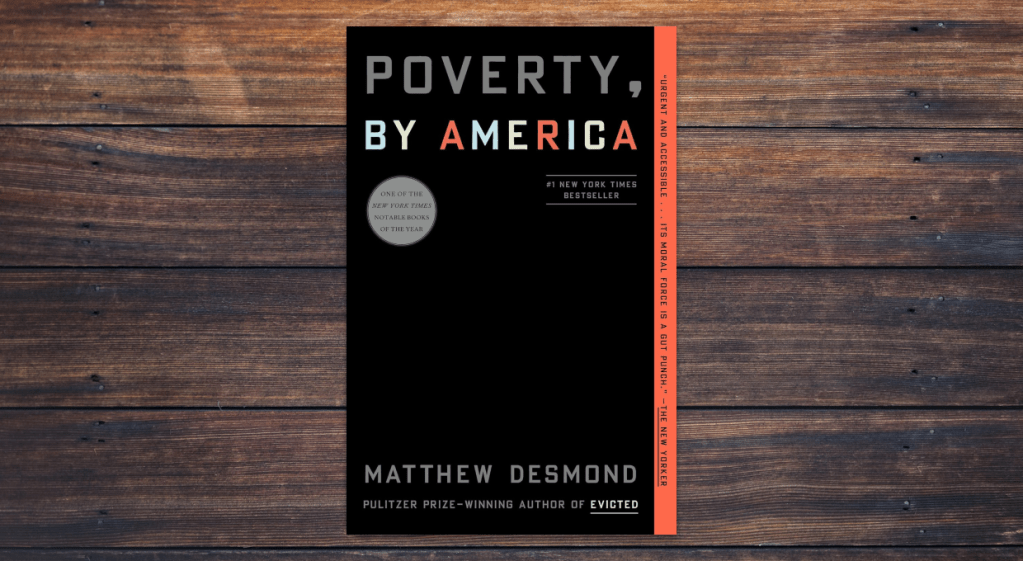
Poverty, by America is a powerful, thought-provoking book written by Pulitzer Prize–winning sociologist Matthew Desmond. Known for his groundbreaking work Evicted, Desmond returns with a timely investigation into the root causes of poverty in the United States—and the uncomfortable truth that many Americans benefit from its existence.
Poverty, by America is not a personal finance guide in the traditional sense, but it offers an important perspective for anyone pursuing financial independence. Understanding the systemic forces that shape economic disparity can help readers become more intentional with their money, their values, and their role in the broader economy.
Who Is Matthew Desmond?
Matthew Desmond is a professor of sociology at Princeton University and a MacArthur “Genius” grant recipient. His previous book, Evicted, focused on the housing crisis and earned him national acclaim. In Poverty, by America, Desmond shifts focus from individual stories to a wider lens, examining the institutions, policies, and behaviors that keep millions of Americans trapped in poverty… even in one of the wealthiest nations on earth.
His academic background, paired with powerful storytelling, gives the book both credibility and emotional weight.
Lessons Readers Can Take Away
One of the central arguments of Poverty, by America is that poverty persists not by accident, but because it is sustained by choices made at every level of society. Desmond challenges readers to rethink how their own financial decisions (from tax breaks to the goods they buy) may play a role in sustaining inequality.
Here are a few key takeaways:
- Poverty is not inevitable. It is manufactured and maintained by systems that prioritize wealth accumulation for the few at the expense of the many.
- Consumption matters. Desmond encourages readers to examine how low-cost goods and services often rely on the exploitation of underpaid labor.
- The wealthy benefit from public policy. Tax loopholes, subsidies, and mortgage interest deductions disproportionately help upper-middle-class and wealthy Americans, deepening the divide.
- There’s power in financial awareness. Just as you use a budget to track spending, understanding how public and private systems allocate resources can help you make more ethical, informed decisions.
While Poverty, by America is more of a moral and political critique than a how-to guide, it provides context that complements a frugal lifestyle. It helps answer not just “How can I save money?” but also “Why do some people struggle to get ahead even when they try?”
Criticisms of the Book
While Poverty, by America is compelling and urgent, it is not without critique:
- Lack of actionable solutions: Some readers may be frustrated by the book’s limited guidance on how individuals can make a tangible impact. While it shines a bright light on injustice, it sometimes leaves readers wondering what concrete steps they can take.
- Broad generalizations: In trying to make a sweeping case, Desmond occasionally paints with a broad brush. Not all readers will agree with every assertion about wealth, policy, or privilege.
- Less personal than Evicted: Compared to his earlier work, Poverty, by America has fewer intimate portraits of people in poverty. Some may find it less emotionally engaging as a result.
Should You Buy It?
If you’re serious about financial independence and believe that money is about more than just numbers in an account, Poverty, by America is worth your time. It won’t teach you how to pay off credit card debt or which financial advisor to hire, but it will challenge your assumptions about the financial systems we live in.
This is a good companion read for people who already track their budget, invest in the S&P 500, and use high-yield savings accounts and treasury bills to build wealth. It asks you to reflect on what kind of economic system you’re participating in and whether it aligns with your values.
Final Thoughts
Poverty, by America is not your typical personal finance book, but that’s exactly why it matters. Poverty, by America offers an opportunity to step back and look at the bigger picture. It reminds us that personal finance is, at its core, personal, but it’s also political, social, and deeply interconnected.
If you’re building your S&P 500 nest egg and aiming for long-term stability, take a moment to read Desmond’s work.
Understanding the forces that keep others from achieving the same goals can deepen your empathy, sharpen your values, and help you become not just a better investor… but a better citizen.



 Winchell House
You must be logged in to post a comment.