
The phrase “voodoo economics” became widely known during the 1980 U.S. presidential campaign, when George H.W. Bush used it to criticize Ronald Reagan’s economic proposals. Over time, the term has been used more broadly to describe economic theories or policies that sound appealing in theory but lack real-world effectiveness. Most often, it is associated with supply-side economics and the idea that tax cuts for the wealthy will spur enough growth to offset lost government revenue.
Understanding what people mean when they use the phrase “voodoo economics” is useful because it highlights how political rhetoric and economic policy can diverge from measurable outcomes.
The line that started it
The insult landed during the 1980 Republican primary. George H.W. Bush, a Yale-educated oilman running against Ronald Reagan, needed a way to attack Reagan’s central promise: that cutting taxes would unleash enough growth to balance the budget. “Voodoo economics” was his shorthand for budget math he considered magical thinking. The phrase stuck because it was vivid, and it followed Bush for the rest of his career.
The irony is the rest of the story. That July, Reagan picked Bush as his running mate, and Bush spent eight years as vice president publicly defending the very policies he had named. He later raised taxes himself as president in 1990, breaking his “read my lips” pledge, a reversal widely blamed for his 1992 defeat. The origin matters because it shows what the phrase really is: not a technical term, but a political weapon, coined by a man who then had to live inside the contradiction.
The Origins of the Term
In 1980, then-presidential candidate Reagan promoted what became known as Reaganomics. A key component was supply-side economics, which argued that cutting taxes, especially for businesses and high earners, would encourage investment, create jobs, and stimulate economic growth. Critics, including George H.W. Bush during the Republican primary, labeled this “voodoo economics,” suggesting it was based more on wishful thinking than sound fiscal analysis.
While Reagan’s policies did stimulate parts of the economy, they also led to large federal deficits and rising national debt, outcomes critics pointed to as proof of the term’s accuracy.
What It Means Today
Today, “voodoo economics” is used more generally to describe policies that overpromise and underdeliver. Examples include:
- Assuming tax cuts always pay for themselves through higher growth
- Believing government spending can rise without creating long-term debt problems
- Trusting complex economic models that ignore human behavior and psychology
The phrase is not a technical economic term, but rather a critique of ideas that appear to be magical solutions to difficult financial problems.
What the supply-siders got right, and what the data said
Fairness requires saying what the critics of the phrase get right. Incentives matter. Marginal tax rates do change behavior: when keeping an extra dollar of income gets harder, people work, invest, and report income differently. The Laffer Curve, the napkin sketch behind the whole debate, makes a true point at the extremes: a 0% tax rate raises no revenue, and a 100% rate would too, since nobody would bother earning. The argument was never really about whether incentives exist.
It was about the revenue claim, and on that the data has been unkind. Federal debt roughly tripled during the 1980s, from under $1 trillion when Reagan took office to about $2.6 trillion by 1988. The 2017 tax cuts were sold with similar pay-for-themselves promises, and the Congressional Budget Office’s own scoring showed them adding roughly $1.5 trillion to deficits over a decade. The honest version of the supply-side case is “tax cuts can raise growth somewhat.” The voodoo version is “tax cuts pay for themselves.” That distinction, between a real effect and a magical one, is the entire argument in one sentence.
The Psychology of Economic Promises
One reason phrases like “voodoo economics” resonate is that people naturally want easy answers to hard questions. Just as in personal finance, where many look for shortcuts to wealth, voters are often attracted to policies that claim to boost prosperity without requiring sacrifice. This reflects how psychology shapes money decisions—both at the household level and at the level of national policy.
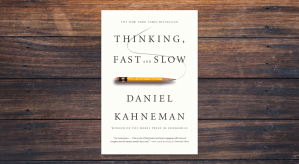
Books on money such as Thinking, Fast and Slow by Daniel Kahneman or Nudge by Richard Thaler explore how biases and optimism can lead people to underestimate risks. When applied to economics, these same tendencies can cause policymakers and citizens to embrace theories that feel good but may not stand up to reality.
What Individuals Can Learn
While national economic policy may be out of your control, there are lessons for personal finance:
- Be skeptical of promises that seem too good to be true, whether from politicians or financial advisors.
- Remember that there are no “magic” strategies for building wealth. Success usually comes from steady saving, frugal living, and long-term investing in reliable assets like the S&P 500.
- Use tools such as budgeting apps to stay grounded in your real numbers, not in hopeful projections.
- Maintain a strong foundation with a high-yield savings account and short-term treasury bills to provide stability.
Final Thoughts
“Voodoo economics” remains a powerful phrase because it captures the tension between political promises and economic reality. For individuals, the takeaway is clear: stick to time-tested financial principles, question ideas that sound like shortcuts, and focus on building a stable financial foundation.









 Winchell House
You must be logged in to post a comment.